Our commercial cleaning approach.

Cleaning is visible. The planning behind it should be just as clear. These four steps frame the discussion around your property.

01

Understand the site

A useful service plan starts with the building: its traffic, finishes, access and the expectations of the people who use it.

  • Spaces and surfaces to maintain
  • Access, circulation and site constraints
  • Priorities identified with the manager
02

Define the mandate

Document what needs to be done, when and by whom. A clear scope gives the manager and the team the same reference.

  • Tasks, frequency and exclusions
  • Schedule and access arrangements
  • A contact and follow-up method
03

Organize the service

Prepare the team and coordinate the work around the building’s operations. Keep useful information accessible to the people involved.

  • Site instructions and priorities
  • Planned recurring or targeted service
  • Unexpected conditions reported
04

Review and adjust

Use field observations to discuss what needs attention and what should evolve as the property’s reality changes.

  • Findings and corrective work
  • Follow-up with the manager
  • Adjustments to the agreed scope
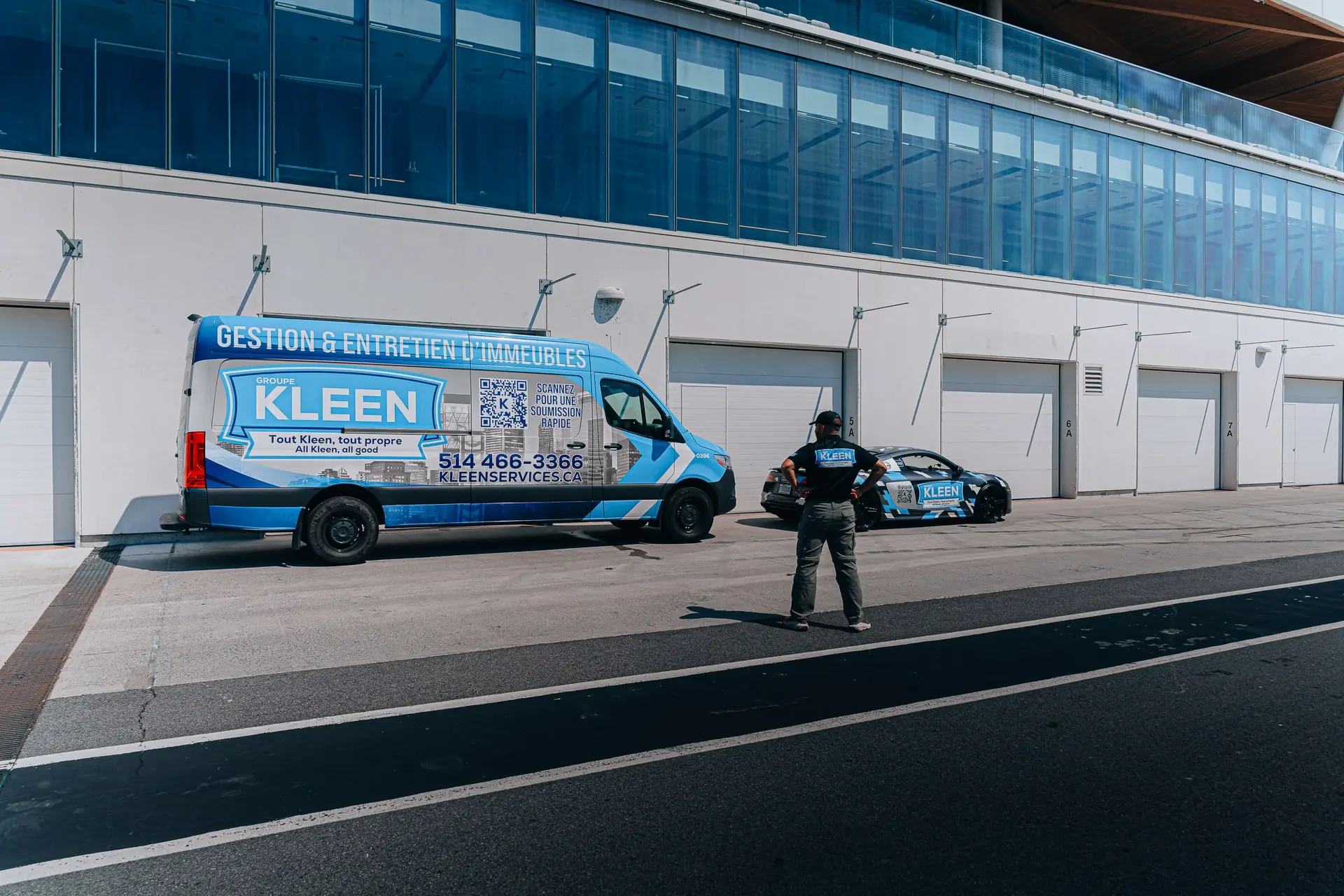
Groupe KLEEN team member in front of a company van and car

People on site. A point of contact for you.

The discussion covers responsibilities, access and how observations are shared. The goal is a mandate that is understandable for everyone involved.

Getting started with KLEEN

A useful start turns your request into concrete instructions, then checks that the first visit matches the agreed scope.

1. Describe the need

Provide the address, property type, spaces and desired rhythm. A public form should not contain access codes.

2. Review constraints

Surfaces, access, occupancy and concurrent work help establish a realistic scope.

3. Confirm the proposal

Inclusions, exclusions, frequencies and responsibilities are defined before starting.

4. Prepare the first visit

Contacts, times, occupant notices and access are confirmed with those involved.

5. Review the start

The first visit provides an opportunity to record adjustments and agree follow-up for open issues.